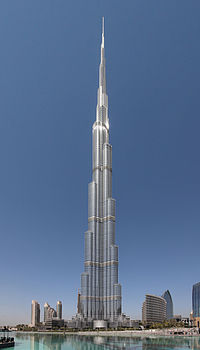
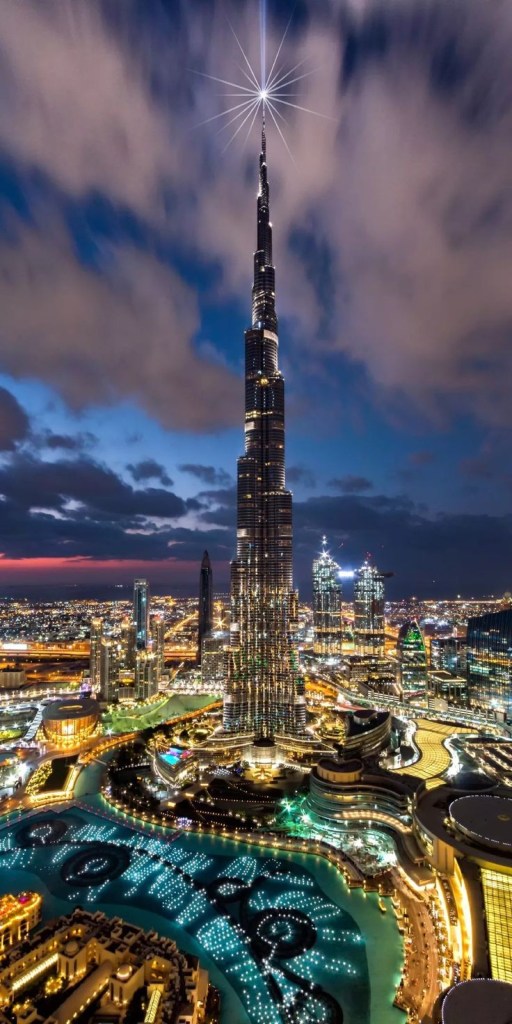
Construction of the Burj Khalifa began in 2004, with the exterior completed five years later in 2009. The primary structure is reinforced concrete and some of the structural steel for the building originated from the Palace of the Republic in East Berlin, the former East German parliament. The building was opened in 2010 as part of a new development called Downtown Dubai. It was designed to be the centerpiece of large-scale, mixed-use development. The decision to construct the building was based on the government’s decision to diversify from an oil-based economy, and for Dubai to gain international recognition.[citation needed] The building is named in honor of the former president of the United Arab Emirates, Khalifa bin Zayed Al Nahyan. Abu Dhabi and the UAE government lent Dubai money to pay its debts. The building broke numerous height records, including its designation as the tallest building in the world.
Burj Khalifa was designed by a team led by Adrian Smith of Skidmore, Owings & Merrill, the firm that designed the Sears Tower in Chicago, a previous record holder for the world’s tallest building. Hyder Consulting was chosen to be the supervising engineer with NORR Group Consultants International Limited chosen to supervise the architecture of the project. The design is derived from the Islamic architecture of the region, such as in the Great Mosque of Samarra. The Y-shaped tripartite floor geometry is designed to optimize residential and hotel space. A buttressed central core and wings are used to support the height of the building. Although this design was derived from Tower Palace III, the Burj Khalifa’s central core houses all vertical transportation except egress stairs within each of the wings. The structure also features a cladding system which is designed to withstand Dubai’s hot summer temperatures. It contains a total of 57 elevators and 8 escalators.
At a certain point in the architectural and engineering process, the original Emaar developers experienced financial problems and required more money and economic funding. Sheikh Khalifa, the then-ruler of the United Arab Emirates, granted monetary aid and funding, hence the changing of the name from “Burj Dubai” to “Burj Khalifa”. The concept of profitability derived from building high-density developments and malls around the landmark has proven successful. Its surrounding malls, hotels, and condominiums in Downtown Dubai have generated the most revenue from the project as a whole, while the Burj Khalifa itself made little or no profit.
The critical reception of Burj Khalifa has been generally positive, and the building has received many awards. However, there were numerous complaints concerning migrant workers from South Asia who were the primary building labour force. These centered on low wages and the practice of confiscating passports until duties were complete.
Glow worm cave
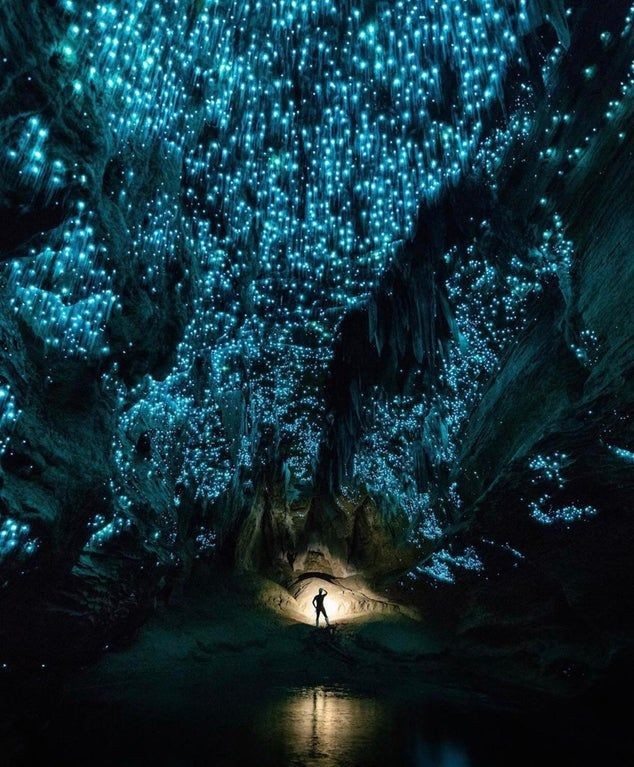
The name “Waitomo” comes from the Māori words wai, water and tomo, hole or shaft. The local Māori people had known about the caves for about a century before a local Māori, originally from Kawhia, Tane Tinorau, and English surveyors, Laurence Cussen and Fred Mace, were shown the entrance in 1884 and Tane and Fred did extensive explorations in 1887 and 1888. Their exploration was conducted with candlelight on a raft going into the cave where the stream goes underground (now the cave’s tourist exit.) As they began their journey, they came across the Glowworm Grotto and were amazed by the twinkling glow coming from the ceiling. As they travelled further into the cave by poling themselves towards an embankment, they were also astounded by the limestone formations. These formations surrounded them in all shapes and sizes.
They returned many times after and Chief Tane independently discovered the upper level entrance to the cave, which is now the current entrance. Visitor access improved when the railway was extended to Ōtorohanga in 1887. By 1889 Tane Tinorau and his wife Huti had opened the cave to visitors and were leading groups for a small fee. Thomas Humphries, (Commissioner of Crown Lands and Chief Surveyor of Auckland 1889 – 1891) did a full study later the same year, noting graffiti had already been inscribed on the ‘most delicate portions’ of the cave, though noting “The natives are now taking great care of the caves”, but recommending that government take over the cave to provide more visitor facilities. About 500 tourists visited the cave in the first two years. After years of attempts to buy the caves, the government used the Scenery Preservation Act 1903 and the Public Works Act 1905 to take them over for £625. In 1906, after an escalation in vandalism,[citation needed] the administration of the cave was taken over by the government. In 1910 the Waitomo Caves Hotel was built to house the many visitors.
Tourist Hotel Corporation, a state-owned business, took over in 1957. The hotel was sold to Southern Pacific Hotels Corporation in 1990 and, in 1994, they agreed a licence for the caves with DOC and the Māori owners, selling it to Tourism Holdings Limited in 1996.
In 1989, the land and cave were returned to the descendants of Chief Tane Tinorau and Huti who comprise many of the employees of the caves today. The descendants receive a percentage of the cave’s revenue and are involved in its management and development under the 1990 Waitomo Deed of Settlement.
Fill your life with adventure, not with things. Have stories to tell, not stuff to show.
 Travel book